You have 48–72 hours in one of the world’s most layered, vivid, and unforgettable countries. Here’s how to actually see it.
Morocco on Semester at Sea
“You step off the ship and the medina pulls you in like a current — narrow alleys, the call to prayer, the smell of charcoal and cumin. Morocco doesn’t ease you in. It arrives all at once.”
If you’re a Semester at Sea student docking in Casablanca, you already know the feeling: a new country, a fresh stamp in your passport, and 48 to 72 hours to figure out a place that has been layering civilization on civilization for over a thousand years.

Morocco is North Africa’s most visited country for good reason. It sits at the crossroads of Berber, Arab, Saharan, Andalusian, and French cultures. The food alone is worth the journey. But Morocco also punishes the underprepared — and rewards those who arrive with a plan.
We at Ticket To Morocco, desig tours for international travelers — including dozens of Semester at Sea groups — for years. This guide is written specifically for you: the college-age traveler with limited days, a spirit of adventure, and a hunger to go deeper than the tourist surface.
WHERE TO GO
Morocco’s Essential Destinations
Your ship docks in Casablanca. From there, nearly everything is reachable. Here’s what each major destination offers — and who it’s right for.
01. Casablanca
Morocco’s economic capital is gritty, modern, and often overlooked. Don’t skip it. The Hassan II Mosque — built partly over the Atlantic — is one of the most breathtaking pieces of religious architecture on earth. The Corniche, the Art Deco downtown, and the old medina offer a Morocco that feels real, not curated for tourists.
▸ Your port city · 1–2 hours from ship
02. Marrakech
The Red City is Morocco’s sensory peak. Djemaa el-Fna square transforms from a daytime market into a sprawling open-air theatre after dark. The souks sell everything from saffron to hand-hammered copper lanterns. 3 hours from Casablanca by train.
▸ Best for: full days · UNESCO medina
03. Fes
The oldest and most intact medieval city in the world. Fes el-Bali has over 9,000 narrow streets — some too thin for two people to pass. The Chouara tanneries, where leather has been dyed using the same methods since the 11th century, are unlike anything else on the planet.
▸ Best for: history lovers · ancient crafts
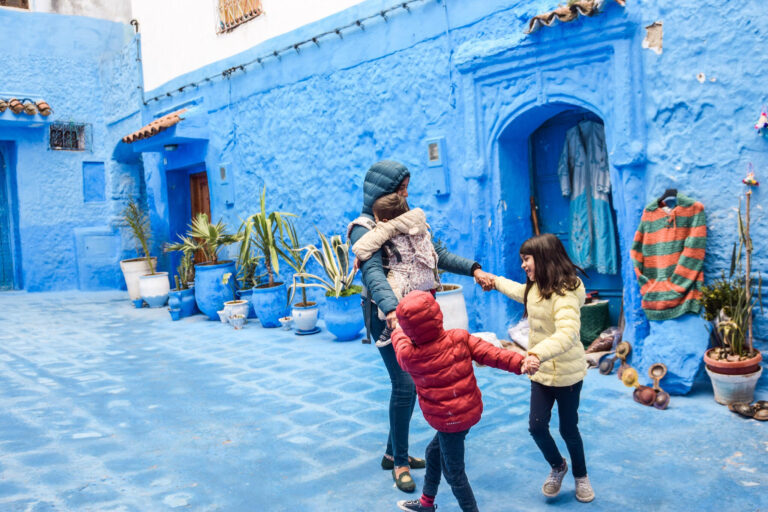
04. Chefchaouen
The blue-painted mountain village tucked in the Rif mountains has become one of Morocco’s most photographed places. More relaxed and cool-temperature than the southern cities. About 5 hours from Casablanca.
▸ Best for: photography · slow travel
05. Sahara Desert
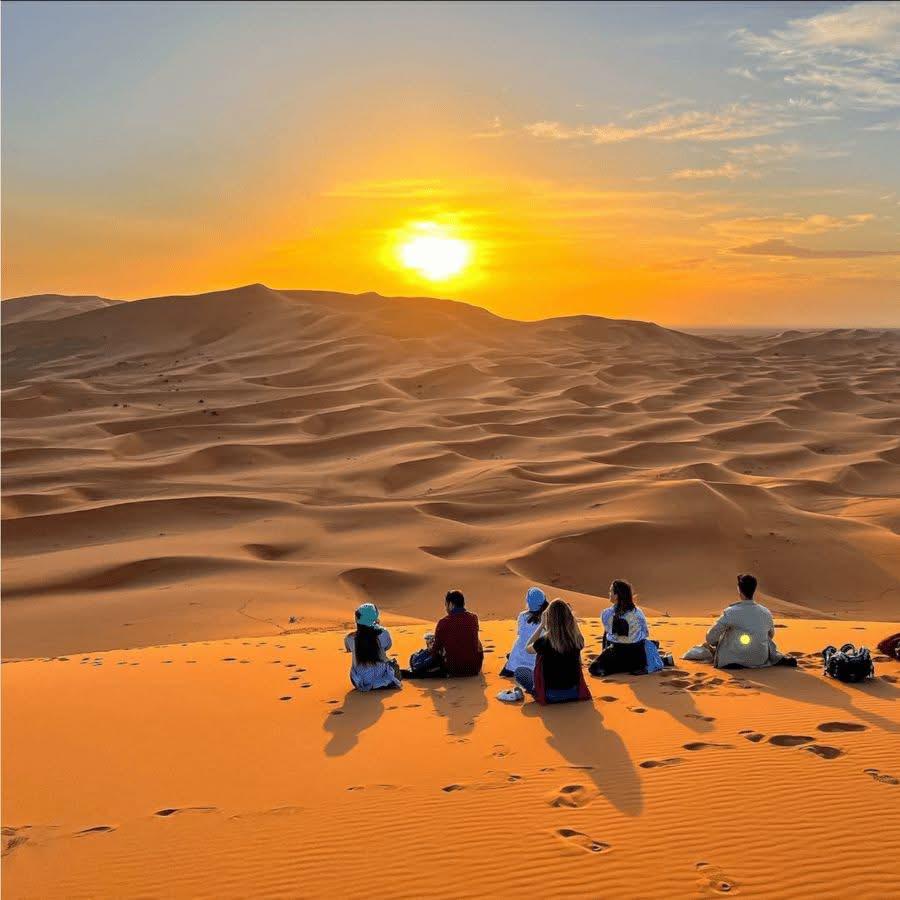
Merzouga, at the edge of the Erg Chebbi dunes, offers camel trekking, a night in a desert camp, and waking up to silence and an ocean of sand. For many SAS students it becomes the single most powerful memory of the entire voyage.


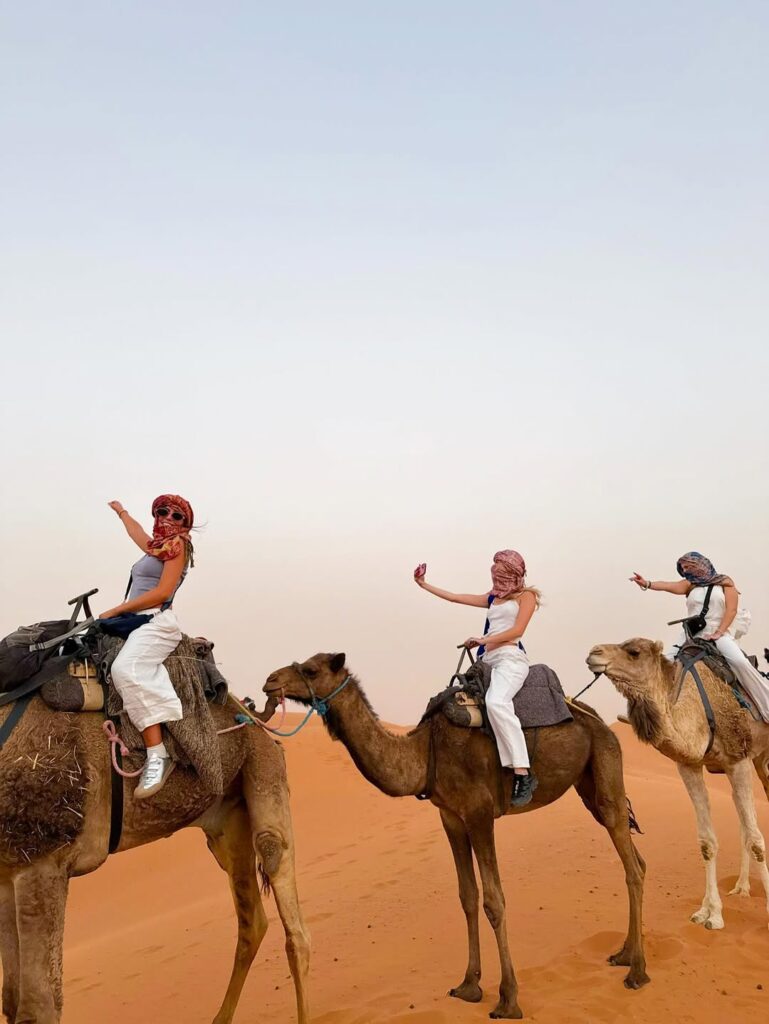
▸ Best for: overnight trips · bucket list

06. Essaouira
A coastal fortress town two hours south of Marrakech, with whitewashed walls, a windswept Atlantic beach, and a thriving arts community. The ramparts at sunset are spectacular.
▸ Best for: beach days · chill vibes
Having spent countless weeks exploring Morocco with families of all sizes and ages, I’ve witnessed firsthand both the magic and the challenges. From toddlers taking their first camel rides in the Sahara to teenagers bargaining in ancient medinas, I’ve seen what works—and what doesn’t—when planning a family trip to Morocco.
In this comprehensive guide, you’ll discover unique family-friendly Morocco itineraries, essential safety protocols, cultural navigation tips, kid-approved cuisine recommendations, and those invaluable insider secrets that transform good family trips into extraordinary adventures.
PRACTICAL ADVICE
What Semester at Sea Students Need to Know
Morocco is beginner-friendly in many ways and surprisingly complex in others. The tips below are drawn from years of working specifically with Semester at Sea groups.
The students who get the most out of Morocco are the ones who slow down. Don’t try to do three cities in two days. Pick one or two places and actually arrive.
Getting Around
Morocco has an excellent train network (ONCF) connecting Casablanca to Rabat, Fes, and Marrakech. Trains are comfortable, punctual, and cheap. For destinations not on the rail network — Chefchaouen, Merzouga, Essaouira — you’ll need a private driver, organized tour, or CTM bus.
Taxis in cities come in two types: petits taxis (small, for within city limits, metered) and grands taxis (shared long-distance rides, fixed routes). Always confirm the price before getting in, or insist on the meter in tourist cities.
Money and Bargaining
Morocco’s currency is the Moroccan Dirham (MAD). ATMs are widely available. Many souks, street food stalls, and small guesthouses are cash-only. Bargaining is expected in the souks — start at roughly 40–50% of the asking price and negotiate from there. It’s part of the social experience, not a fight.
Cultural Respect
Morocco is a Muslim-majority country with strong traditions around dress and behavior. In medinas and religious sites, dress modestly — covered shoulders and knees for both men and women. During Ramadan, be respectful about eating or drinking in public. When in doubt, follow the lead of locals around you.
Safety
Morocco is generally very safe for international travelers, including solo women travelers. Having a legitimate local guide — or a pre-arranged tour — eliminates most friction points. Fake guides and commission-based shop hustles are common in big tourist medinas; booking through a registered operator protects you.
The vibrant colors alone—from Chefchaouen’s blue walls to Marrakech’s red ramparts—create an Instagram-worthy backdrop for family photos. Children naturally connect with Morocco’s warmth, from friendly locals who genuinely love kids to the country’s family-centric culture.
EAT THIS
Moroccan Food: A Field Guide
Moroccan cuisine is one of the most complex and celebrated in the world. It combines Berber, Moorish, Arab, and French influences into something entirely its own. Here’s what to seek out:
Street Food: Msemen (folded flatbread with honey and butter), sfenj (Moroccan doughnuts), kefta brochettes (spiced lamb skewers), and fresh-squeezed orange juice from carts everywhere.
Tagine: The national dish — a slow-cooked stew of meat with vegetables, preserved lemon, olives, and spices, served in the conical clay pot it’s cooked in. Every region has its own version. Try it in a traditional riad, not a tourist trap on the main square.
Couscous: Friday is couscous day in Morocco — families gather for a massive shared dish of steamed semolina with slow-braised lamb, caramelized onions, and raisins. If you’re there on a Friday lunch, seek this out.
Pastilla (Bastilla): A flaky puff pastry pie filled with chicken or seafood, cinnamon, almonds, and a dusting of powdered sugar. It sounds strange. It’s extraordinary. A Fassi specialty from Fes.
Harira: A hearty tomato and lentil soup with chickpeas, coriander, and lamb, traditionally eaten to break the Ramadan fast. Widely available year-round and perfect with msemen flatbread.
Mechoui: Whole slow-roasted lamb served with cumin salt and khobz (round flatbread). Look for mechoui stalls tucked into the medinas of Marrakech and Fes.
Mint Tea: Called ‘Moroccan whiskey’ locally — poured from a height to create a froth, served blazing sweet. Accepting tea from a shopkeeper or host is an act of connection. Never refuse it.
BEFORE YOU DISEMBARK
Quick Tips
🚂 Book Trains Early
ONCF train tickets can be booked online at oncf.ma. Book ahead, especially for Marrakech — trains fill up during busy periods.
🏨 Stay in a Riad
A riad is a traditional Moroccan house built around an interior courtyard. Staying in one — even for one night — gives you a sense of Moroccan domestic life that a hotel never can.
📍 Download Offline Maps
The medinas of Fes and Marrakech are notoriously disorienting. Download offline maps before you enter. GPS still works without data.
💬 Learn 5 Words of Darija
“Shukran” (thank you), “La shukran” (no thank you), “Bsaha” (cheers), “Labas?” (how are you?), “Waha” (okay). Locals love it.
🌅 Go Early
The medinas, souks, and tanneries are best in early morning light before the crowds arrive. Set your alarm. It’s worth it.
🎒 Use a Reputable Guide
Licensed local guides unlock context and access that independent travel simply can’t replicate — especially in complex cities like Fes. Book through a registered operator like Ticket Morocco.
Ready to Make the Most of Your Morocco Port Days?
We design custom day trips and multi-day itineraries specifically for Semester at Sea students. Small groups, licensed guides, real experiences. Reach out directly to start planning.